
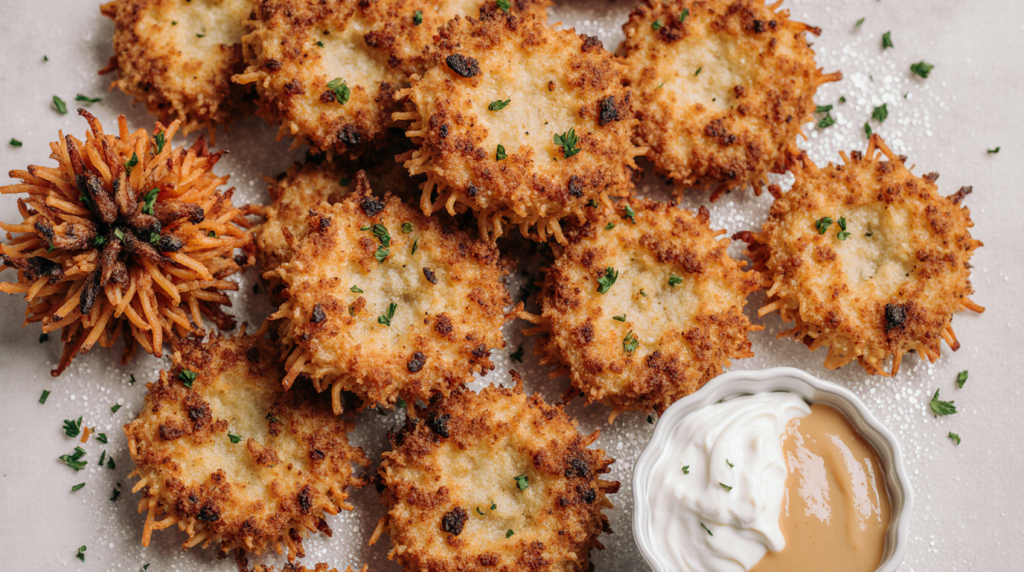
A Potato Latkes Recipe is one of the most iconic and beloved dishes of Hanukkah, celebrated for its irresistible crisp edges, tender center, and connection to the holiday’s history. For generations, families have gathered around the stove to fry batches of these golden potato pancakes, filling their homes with warmth, laughter, and the unmistakable aroma of sizzling latkes. This simple yet deeply meaningful recipe honors the miracle of the oil while bringing comfort and tradition to every Hanukkah table.
Table of Contents
Ingredients for Classic Potato Latkes Recipe
- 4 large russet potatoes, peeled and grated
- 1 medium onion, grated
- 2 large eggs
- ½ cup matzo meal or all-purpose flour
- 1 teaspoon salt
- ½ teaspoon black pepper
- ½ teaspoon baking powder (optional)
- Neutral frying oil (canola, vegetable, sunflower)
To Serve:
- Applesauce
- Sour cream
- Chives, green onions, or smoked salmon (optional)
Instructions for Making the Best Potato Latkes
- Grate the potatoes and onion.
Use a box grater or a food processor. Transfer the mixture to a clean kitchen towel immediately to prevent browning. - Squeeze out excess liquid.
Twist the towel tightly and press until almost all the moisture is removed. This step ensures the latkes become crisp instead of soggy. - Combine ingredients.
Place the grated mixture into a bowl. Add eggs, matzo meal or flour, salt, pepper, and optional baking powder. Stir until the batter holds together but is not overly dense. - Heat the oil.
Add enough oil to coat the bottom of a heavy skillet. Heat over medium-high until shimmering. Test by dropping in a small amount of batter; it should sizzle instantly. - Shape and fry the latkes.
Scoop two tablespoons of batter for each pancake. Flatten slightly and fry three to four minutes per side until deep golden and crisp. - Drain.
Transfer cooked latkes to a paper towel–lined baking sheet to absorb excess oil. - Serve immediately.
Enjoy with applesauce, sour cream, or any topping of your choice.
A Complete Guide to the Ultimate Potato Latkes Recipe
This Potato Latkes Recipe is one of the most cherished dishes associated with Hanukkah. The simplicity of potatoes, onions, flour, eggs, and oil transforms into a comforting and deeply flavorful experience with every crisp bite. More than a recipe, latkes represent tradition, celebration, and the warmth of gathering around the kitchen during the winter season. While they are a highlight of Hanukkah recipes, potato latkes can be enjoyed year-round as an unforgettable appetizer or side dish.
This long-form guide walks you through everything you need to know: the cultural meaning of latkes, why this recipe works, how to perfect your texture, common mistakes to avoid, and creative variations for modern cooks.
Why This Potato Latkes Recipe Matters
Latkes carry a powerful place in Jewish culinary heritage. The act of frying them in oil directly connects to the Hanukkah story, which honors the miracle of a small amount of oil lasting eight days in the Temple’s menorah. Preparing a Potato Latkes Recipe is therefore more than cooking; it is part of a ritual that honors resilience, faith, and historical memory.
Homes celebrating Hanukkah often come alive with the sound of sizzling oil and the smell of crisp potatoes frying. The process brings generations together. Children learn to grate potatoes beside parents and grandparents, and families debate whether sour cream or applesauce is the superior topping. These shared experiences are as valuable as the final dish.
Understanding the Key Ingredients
The ingredients in a classic Potato Latkes Recipe are simple, but each plays an essential role in texture, flavor, and structural integrity.
Potatoes:
Russet potatoes are ideal due to their high starch content, which helps the latkes bind together without becoming mushy.
Onion:
Grated onion blends with the potato to create balance, sweetness, and depth of flavor.
Eggs:
Eggs hold the batter together during frying.
Matzo Meal or Flour:
This absorbs the remaining moisture and helps form a cohesive structure.
Matzo meal creates a traditional texture, while flour offers a slightly softer interior.
Salt and Pepper:
The simplest seasonings deliver the pure, clean flavor associated with classic latkes.
Baking Powder:
Optional, but helpful for creating a lighter interior.
Oil:
The oil does more than fry; it symbolizes the centerpiece of Hanukkah recipes and carries centuries of tradition.
The Science of Crispy Latkes
Every good Potato Latkes Recipe must consider the science behind crispiness. Three factors determine success:
1. Moisture removal
Potatoes contain a large amount of water. Too much moisture prevents proper browning and leads to soggy results.
Pressing vigorously ensures the latkes fry instead of steam.
2. Proper oil temperature
Oil that is too cold causes greasy latkes. Oil that is too hot burns the outside before the inside cooks.
A steady medium-high heat creates even browning.
3. Avoiding overcrowding
Adding too many latkes to the pan lowers the oil’s temperature. Fry in small batches for consistent results.
Mastering these principles ensures crisp edges, tender centers, and rich, savory flavor.
Historical and Cultural Context
While this Potato Latkes Recipe is rooted in modern cuisine, the tradition behind it stretches back centuries. Before potatoes became widely available in Eastern Europe, Hanukkah recipes often featured cheese fritters fried in oil. Once potatoes spread across Europe in the 17th and 18th centuries, they became a staple ingredient due to their affordability and versatility.
Potatoes quickly took center stage in many Jewish households, forming the basis of what we now know as potato latkes. Over time, the dish became inseparable from Hanukkah celebrations, reflecting the adaptability of Jewish communities as they blended local ingredients with traditional customs.
Common Issues and How to Fix Them
Even seasoned cooks can run into trouble with latkes. Here are the most common challenges and how to overcome them:
Latkes fall apart:
Often caused by too much moisture. Solution: squeeze potatoes more thoroughly and add a bit more binder.
Latkes absorb too much oil:
Oil is too cold. Let it reheat between batches.
Latkes burn quickly:
Heat is too high. Reduce slightly and cook more slowly.
Latkes become soggy after cooking:
They need proper drainage. Place on a wire rack or paper towels.
By understanding these pitfalls, you can perfect your Potato Latkes Recipe every time.
Best Ways to Serve Latkes
Potato latkes shine as a central dish in Hanukkah recipes, but they pair beautifully with a wide range of toppings and sides. Traditional options include applesauce, which adds brightness and acidity, and sour cream, which adds richness. Both contrast beautifully with the crisp latke exterior.
Modern cooks have developed a variety of creative accompaniments:
- Smoked salmon
- Chopped chives
- Caramelized onions
- Roasted garlic aioli
- Cranberry relish
- Avocado slices
- Herbed yogurt dips
- Pomegranate seeds
- Latkes also work well as part of a larger meal alongside a hanukkah brisket recipe, roasted chicken, salmon, winter salads, or hearty soups.
Variations of the Traditional Potato Latkes Recipe
While the classic Potato Latkes Recipe remains the gold standard, there are countless variations that add new flavors while staying true to the dish’s essence.
- Sweet Potato Latkes
Adds sweetness and vibrant color - Zucchini Latkes
Light and delicate with a softer texture - Beet Latkes
Earthy, colorful, and striking on the plate - Carrot and Parsnip Latkes
Naturally sweet with a rustic flavor - Curried Latkes
Warm, aromatic spices for a modern twist - Gluten-Free Latkes
Use almond flour or gluten-free matzo meal
These versions expand the holiday table and cater to a variety of dietary needs while honoring the tradition of frying in oil.
Vegan Friendly Potato Latkes
Vegan latkes are easy to make and retain the crispness of the traditional version. The main adjustment is replacing the eggs with a simple binder.
To replace two eggs, combine:
- 2 tablespoons ground flaxseed
- 6 tablespoons warm water
- Let sit for five minutes until thickened.
This mixture binds the potatoes and produces crisp, flavorful vegan latkes.
Storing and Reheating Tips
Latkes can be made ahead without sacrificing quality.
Refrigeration:
Store in an airtight container for up to 3 days.
Freezing:
Freeze on a baking sheet, then store in freezer bags for up to 3 months.
Reheating:
Bake at 425°F (220°C) for 8–10 minutes
or
Air fry at 400°F (200°C) for 5–6 minutes.
Avoid microwaving, which softens the crisp exterior.
Frequently Asked Questions About Potato Latkes
Why do grated potatoes turn brown?
Oxidation. Work quickly or rinse in cold water, then dry thoroughly.
Can I prepare the mixture in advance?
Partially. Grate potatoes ahead, store in cold water, and squeeze before mixing.
Which oil is best?
Neutral, high-smoke-point oils such as canola, sunflower, or safflower.
Can I bake latkes instead of frying?
Yes, but frying delivers the most authentic result. Baking requires high heat and generous oil brushing.
Why This Potato Latkes Recipe Works
This recipe combines traditional technique with clear, practical steps.
Removing moisture ensures crispiness.
Using russet potatoes provides structure.
Proper seasoning highlights the natural flavor.
Shallow frying creates a beautiful golden crust while maintaining tenderness inside.
The simplicity of the method reflects the roots of Jewish home cooking, while the attention to texture and technique brings out the full potential of the dish.
Final Thoughts
This Potato Latkes Recipe is not only a must-have for Hanukkah; it is a celebration of comfort, culture, and community. Latkes bring people together, transforming simple ingredients into something rich with meaning and flavor. Whether enjoyed with applesauce, sour cream, or modern toppings, they remain a cherished part of Hanukkah recipes around the world.
By mastering this recipe, you carry forward a tradition that has been shared for generations — a connection to history, family, and the enduring warmth of holiday cooking.