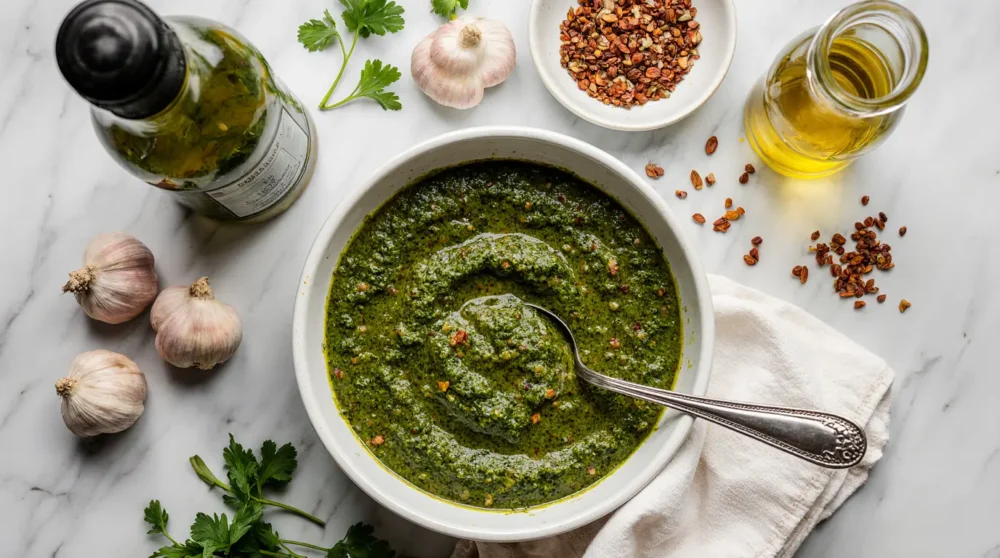
Table of Contents
Chimichurri is one of the most vibrant, flavor-packed sauces in the world, originating in Argentina and quickly becoming a global favorite. Known for its bold herbal freshness, tangy acidity, and versatility, this legendary green sauce is traditionally served with grilled meats—but its uses extend far beyond classic steak pairings. Today, cooks everywhere use chimichurri as a marinade, salad dressing, dipping sauce, vegetable topping, sandwich spread, and more.
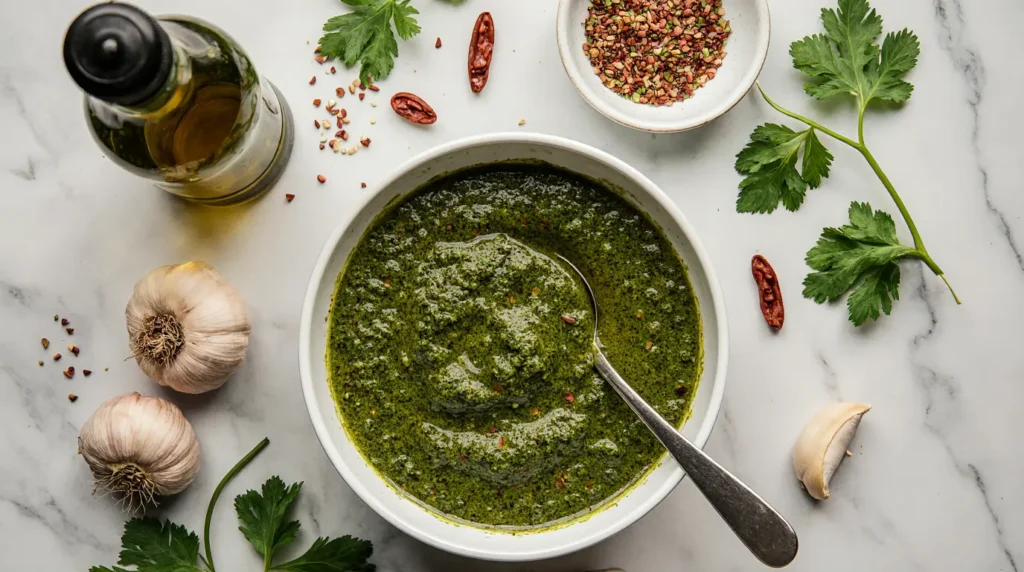
This detailed Chimichurri Sauce Recipe begins immediately with ingredients and instructions so your readers can get cooking right away. After the recipe, you’ll find a deep dive into its origins, variations, usage tips, storage advice, and serving ideas—creating a complete, long-form blog article perfect for SEO and user engagement.
Ingredients of the Chimichurri Sauce Recipe
- 1 cup fresh parsley, finely chopped
- ½ cup fresh cilantro, finely chopped (optional but recommended)
- 4–5 garlic cloves, minced
- 2 tablespoons fresh oregano, chopped (or 1 teaspoon dried oregano)
- ½ cup extra-virgin olive oil
- 3 tablespoons red wine vinegar
- 1 tablespoon lemon juice (optional for added brightness)
- ½ teaspoon crushed red pepper flakes
- ½ teaspoon black pepper
- 1 teaspoon salt
- Optional additions:
- 1 small shallot, finely minced
- 1 teaspoon smoked paprika
- 1 tablespoon finely chopped fresh basil
Instructions of the Chimichurri Sauce Recipe
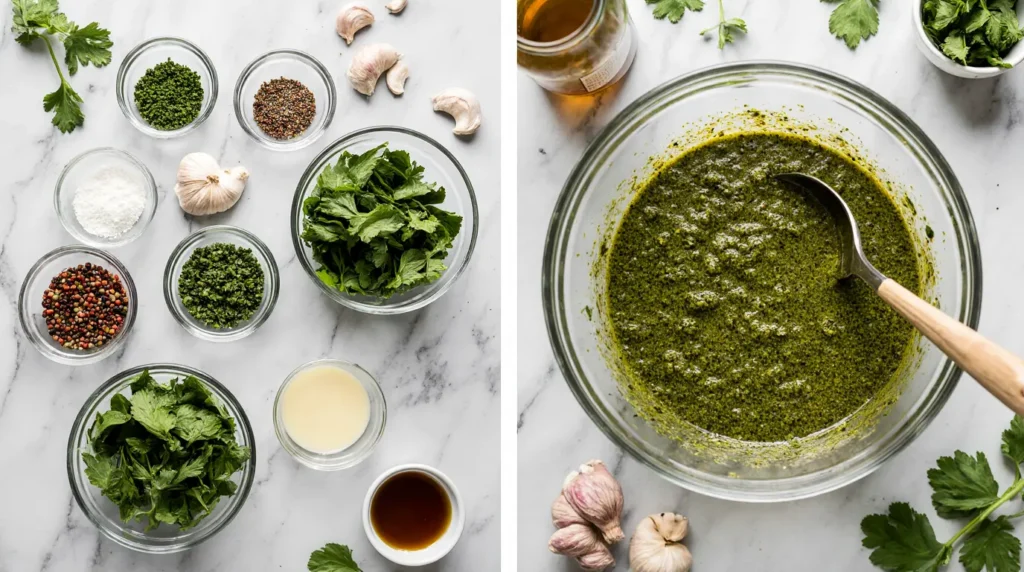
1. Prep the herbs
Finely chop parsley, and if using, cilantro and oregano. Avoid using a food processor; hand-chopping prevents bruising and preserves texture.
2. Combine the base ingredients
In a medium bowl, mix the parsley, cilantro, oregano, garlic, and optional shallot. Blend gently to distribute the aromatics evenly.
3. Add acidity
Pour in the red wine vinegar and optional lemon juice. Stir well; the acid begins to soften the garlic and enhance the herb flavors.
4. Add olive oil
Slowly pour in the olive oil while stirring. The mixture should look loose, glossy, and herb-forward—not blended like pesto.
5. Season
Add salt, black pepper, and crushed red pepper flakes. Adjust seasoning to taste—chimichurri should be bright, sharp, and aromatic.
6. Rest before serving
Let the sauce sit for at least 20 minutes, ideally 1–2 hours. Resting allows flavors to meld and deepen.
What Makes This Chimichurri Sauce Recipe Truly Authentic
Authentic chimichurri is rustic, hand-chopped, and vibrant. Unlike pesto, it is not blended into a paste. The herbs remain textured, the vinegar shines through, and the olive oil acts as a carrier for the aromatics. The balance of herbal freshness, acidity, and heat makes this sauce unique among global condiments.
Traditional Argentine chimichurri contains parsley, oregano, garlic, red wine vinegar, olive oil, and crushed red pepper flakes. Cilantro is not traditional in Argentina but is widely loved in modern interpretations because it adds earthiness and depth, making the sauce even more versatile.
The Origins of Chimichurri Sauce Recipe
Chimichurri comes from Argentina and Uruguay, where it has long been used as a table sauce for grilled beef—especially during asado, the South American barbecue tradition. Its name likely derives from Basque or Spanish expressions referring to mixtures of herbs and spices. Over time, chimichurri spread worldwide due to its simplicity and explosive flavor.
Today, it appears in home kitchens, restaurants, food trucks, and cooking competitions everywhere, serving as both marinade and finishing sauce.
How to Use Chimichurri Sauce Recipe
This Chimichurri Sauce Recipe is incredibly versatile. While classically paired with steak, it enhances almost any savory dish.
Best uses for chimichurri Sauce Recipe:
• Grilled steak, chicken, shrimp, or tofu
• Roasted vegetables (especially potatoes, carrots, and cauliflower)
• Pasta salads or grain bowls
• Sandwiches and wraps
• As a marinade for meats or plant-based proteins
• Drizzled over pizza or flatbread
• Mixed into rice or quinoa
• As a dipping sauce for crusty bread
Because chimichurri is uncooked, it retains its freshness and potency no matter how it’s used.
Red Chimichurri (Chimichurri Rojo)
A popular variation of the classic green chimichurri replaces some herbs with spices such as paprika, chili powder, and tomato paste. The result is a smoky, red-toned sauce that pairs exceptionally well with grilled foods.
Ingredients for red chimichurri:
• Olive oil
• Red wine vinegar
• Garlic
• Paprika
• Oregano
• Chili flakes
• Parsley (less than in the green version)
• Tomato paste (optional)
This variation offers deeper warmth and heat and is often used as a marinade.
How to Adjust the Flavor of Chimichurri
To make it spicier:
Add more red pepper flakes or a minced fresh chili.
To make it more acidic:
Increase red wine vinegar or lemon juice.
To make it milder:
Add more olive oil or reduce garlic.
To make it brighter:
Add extra lemon zest or a handful of basil.
Chimichurri is extremely forgiving and customizable, making it perfect for any palate.
Common Mistakes When Making Chimichurri
Using a blender
Blending turns chimichurri into an oily paste and destroys the traditional texture.
Not letting it rest
Fresh chimichurri tastes raw; resting allows the flavors to settle and develop.
Using low-grade olive oil
Since the sauce is uncooked, the quality of the oil matters.
Adding too much garlic
Even garlic lovers should avoid overpowering the herbs.
How to Store Chimichurri Sauce
Chimichurri stores exceptionally well, making it ideal for meal prep.
Refrigerator:
Up to 5 days in an airtight container. Add a thin layer of olive oil on top to maintain freshness.
Freezer:
Up to 3 months. Freeze in small portions using ice cube trays.
Best method:
Allow chimichurri to come to room temperature before serving; cold olive oil solidifies and dulls the flavor.
Pairing Ideas for Chimichurri
Proteins:
• Grilled steak
• Chicken thighs
• Shrimp or prawns
• Tofu or tempeh
• Seitan steaks
• Roasted chickpeas
Vegetables:
• Grilled zucchini or eggplant
• Roasted potatoes
• Charred corn
• Baked mushrooms
• Asparagus
• Cauliflower steaks
Carbs:
• Crusty bread
• Rice
• Pasta
• Quinoa
• Potatoes
Chimichurri’s acidity allows it to cut through rich foods while lifting the flavor of milder ingredients.
Frequently Asked Questions
Can I make chimichurri without cilantro?
Yes—traditional chimichurri uses only parsley and oregano.
Can I make it oil-free?
Oil-free versions exist, but they lose the authentic texture.
Is chimichurri spicy?
It has mild heat but can be made spicier based on preference.
Is chimichurri healthy?
Yes. It’s rich in antioxidants, herbs, heart-healthy fats, and anti-inflammatory compounds.
Final Thoughts
This Chimichurri Sauce Recipe offers an authentic taste of Argentina packed with freshness, acidity, and complexity. Whether spooned over grilled vegetables, drizzled onto tofu, or served alongside a barbecue feast, chimichurri elevates every dish it touches. With its bold flavor and incredible versatility, it deserves a permanent place in every kitchen.